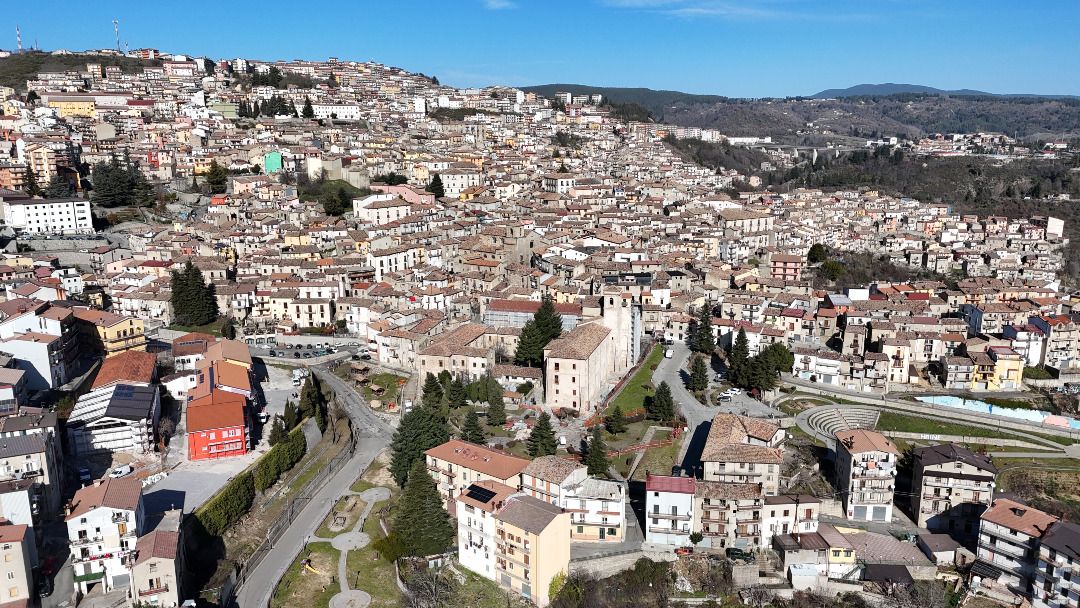
The village of San Giovanni in Fiore is nestled among the woods of the Sila National Park, in Sila Grande. Its boundaries touch the shores of Lake Arvo with the hamlet of Lorica, one of the most renowned tourist destinations in Sila.
The Florense Abbey
The village has its roots in the Middle Ages, specifically in the 12th century, when families of workers settled around the Abbey founded by the Florense Monks, the Order created by Abbot Joachim. Fiore is nothing more than the place where the Abbey stands, a very important symbolic image to the point that Joachim himself signed his testamentary letter as "Abbot of Fiore." Fiore, in fact, is not the place of fulfillment but the place of announcement, it is Nazareth.
Over the centuries, the Florense Abbey has represented a spiritual and cultural center of international resonance and still today attracts scholars, tourists, and faithful from all over the world.
The International Center for Joachimite Studies
On the upper floors of the Abbey is the International Center for Joachimite Studies, established on December 2, 1982, on the initiative of a group of Florense intellectuals with the support of the municipal administrations of Celico, Luzzi, and San Giovanni in Fiore. Today, presided over by Giuseppe Riccardo Succurro, the Center promotes, disseminates, and publicizes the figure and thought of Joachim of Fiore through the publication of his works, the organization of academic seminars, and educational meetings for primary and secondary school students. Every five years, the Center also organizes an "International Congress" with the participation of universities and scholars from Europe and America. A very important moment in which Calabria assumes a leading role in Medieval History. The Calabrian Abbot, in fact, is among the most studied figures of the era, along with Dante Alighieri and Saint Bonaventure of Bagnoregio.
The Village
The heart of the village preserves some of the artisanal traditions that have represented the main economic source for centuries, such as the goldsmith tradition and the textile tradition with handloom weaving, still widespread today. These testimonies are preserved within the Demological Museum of Economy, Work, and Social History of Sila, inside the Abbey.
In the center, there are also trattorias and restaurants offering dishes from the Sila gastronomic tradition: Sila IGP Potato, Caciocavallo Silano DOP, Pitta 'Mpigliata, Turdilli.