Civita is one of the villages in the province of Cosenza that is part of the network of "The Most Beautiful Villages in Italy." It offers tourists various aspects and interests, capturing those interested in history, nature, and those who want to explore the Arbëresh culture in Italy.
The Village of Civita
Civita has ancient origins and has been populated over the centuries by Greeks, Romans, Byzantines, Saracens, and Albanians. Converted into a Castrum around the year 1000, it was destroyed by a violent earthquake in 1456. The Albanian communities gave new life to the settlement, rebuilding it starting from 1471. The peculiarity of the village is its being nestled among the rocks. Civita is surrounded by high mountains that open up to incredible landscapes.
Kodra Houses and Chimneys
Walking through the historic center of Civita cannot help but bring a smile when recognizing human features among the small houses that characterize the heart of the village. These are the Kodra Houses, named because they resemble the figures painted by the Albanian artist Ibrahim Kodra. These constructions are "anthropomorphic": the windows are the eyes; the chimneys form the nose; the doors are the mouth.
But looking up at the roofs, you can also recognize particular shapes in the chimneys: funny faces, shapes that instill fear, or depicting animals. The connection is with ancient superstitions and legends related to the expulsion of evil spirits; more likely to allow strong gusts of wind to flow, often emitting particularly suggestive sounds and vibrations.
Çifti
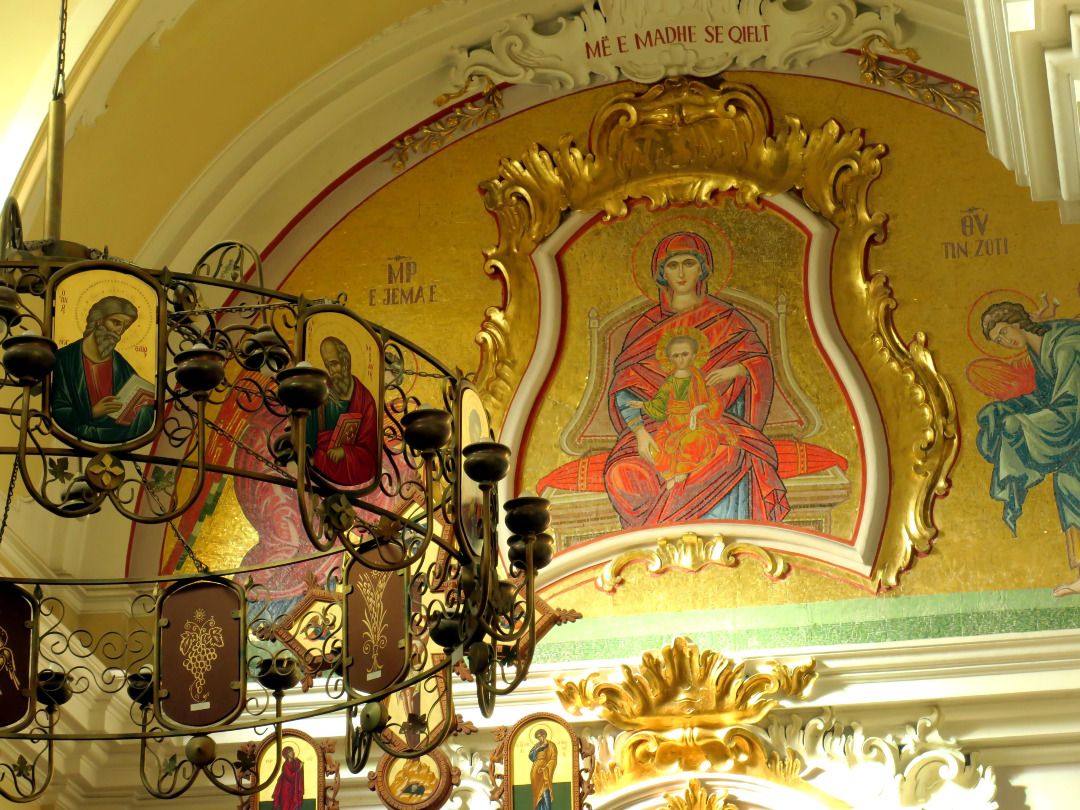
Civita is among the most significant villages for coming into contact with the Arbëresh tradition, a culture that has become a symbol of identity resistance while perfectly integrating into the regional context of Calabria. Religious functions, dances and songs, and the language have been preserved and passed down for five centuries. Even today, Arbëresh is not only commonly spoken but is also used in the publication "Katundi Ynë," Our Village, a Civita newspaper aimed at the resident and distant community. Places of interest within the village include the Church of Santa Maria Assunta, with its Byzantine iconostasis, and the Arbëresh Ethnic Museum, which allows exploring this millennial culture even through digital supports.
The Raganello Gorges and the Devil's Bridge
Whirling waters flow between the rocky walls around Civita. These are the waters of the Raganello stream, which constitute, in harmony with the surrounding environment, the Raganello Gorges Nature Reserve, a protected area of 1,600 hectares within the Pollino Park. The Canyon, 17 km long, offers wonderful spectacles, colors, and water games. The stream inside flows rapidly, opening up to the valley once it has passed the Devil's Bridge, a construction so perfect in its "donkey back" architecture overhanging the river that it is thought to have been created by a supernatural entity.
The Devil's Bridge and the Raganello Reserve are at the center of numerous hiking trails, such as the Devil's Bridge Trail, which starts from the main square and reaches the Bridge, crossing the old mule track where commercial exchanges once took place.
Typical Civita gastronomy recalls Albanian cuisine but also Calabrian gastronomy in general and Pollino in particular. A "poor" cuisine where homemade bread baked in the fireplace was one of the always-present foods along with ferretto pasta, legumes, vegetables, and meat. Arbëresh cuisine can be found in many Civita restaurants around the main square.
The journey to Civita is rich in history and culture, an ideal destination for slow and sustainable tourism, in perfect harmony with nature.